
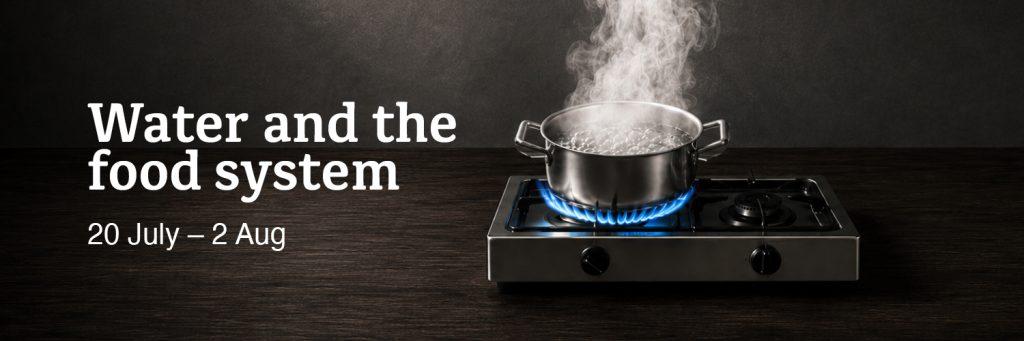
Water is no longer a distant environmental concern; it is already shaping how we live, grow food, govern cities and navigate everyday life. Across South Africa and much of the world, climate instability, prolonged droughts, ecosystem degradation, and increasing pressure on urban infrastructure are exposing how closely water and food systems are connected. As communities grapple with water scarcity, questions about resilience, equity and adaptation have become increasingly urgent. What can we learn from past crises? How can cities prepare for a water-scarce future? What role can communities play in building more resilient food systems?
This year’s Food Indaba theme, Water Systems and Food Systems: Rivers, Oceans, Aquifers and Rainfall (ROAR), invites us to look deeper. The focus is not only on water as a resource but also on the social, political, and economic systems that shape who has access to it, how it is governed, and what it means for food security. As South Africa reflects on the lessons of Cape Town’s Day Zero crisis and confronts growing climate uncertainty, Food Indaba 2026 creates a platform for critical conversations about the future of food and water.
The Food Indaba also asks what a water-scarce future might look like and what existing experiences of scarcity can teach us. Across Africa and the Global South, many communities already rely on social infrastructure, local networks and alternative systems to access water. As climate pressures intensify, these experiences may offer important lessons for building more resilient food and water futures. The goal is to help us engage with greater understanding and capacity as we explore pathways towards adaptation, resilience and collective action.
These questions will come to the fore in two major events.
On 20 July, the Global South Webinar: Water and the Food System will bring together voices from across Africa and the wider Global South for a FREE online discussion. Presented by the African Centre for Cities, the webinar explores how the social infrastructure that supports our water-scarce present can help us navigate water-scarce futures. Panellists from Ghana, Mozambique, Bangalore, Mossel Bay and Cape Town will examine the relationship between large-scale water infrastructure and community-led systems of water access. Discussions will explore how multiple forms of infrastructure can be layered together to create more resilient water systems, and what this could mean for food production, food access and urban livelihoods. Participants will also consider the role of local governance, citizen forums and secondary cities in shaping future water security.
Then, on 24 July, the Water, Food and the Coming Crisis Conference takes place in person in Cape Town. Co-hosted by Food Indaba and the DSI-NRF Centre of Excellence in Food Security, this one-day gathering brings together researchers, policymakers, activists, municipalities, innovators, community organisers and the private sector to examine the deep and increasingly urgent relationship between water and food security. The programme will explore the historical role of water in shaping Cape Town, emerging global concerns around “water bankruptcy”, and the growing risks posed by climate-driven drought and ecosystem degradation.
The conference will also reflect on the lessons of Day Zero and the COVID-19 lockdown, highlighting how communities mobilised around food and water insecurity during periods of crisis. Throughout the day, participants will engage with practical solutions, from technological innovation and governance interventions to grassroots organising and community resilience. Discussions will focus on building food systems better equipped to withstand future shocks while ensuring that issues of inequality, access, and justice remain central to the conversation.
The wider Food Indaba programme offers something for everyone, including walking tours, Tea with a Farmer experiences, public dialogues, workshops, exhibitions and community events taking place across Cape Town. Together, these activities create opportunities for broad participation and ensure that a diverse range of voices are heard as we work towards healthier, more resilient and more equitable food systems.
Whether you’re joining online or attending in person, Food Indaba 2026 offers an opportunity to engage with one of the defining challenges of our time. Visit foodindaba.org/fi26 to register, sign up for updates and become part of the conversation.
Food Indaba is hosted by the SA Urban Food & Farming Trust. The conference is co-hosted with the DSI-NRF Centre of Excellence in Food Security and supported by the UNESCO Chair in Science and Education for African Food Systems and the African German Centre for Sustainable and Resilient Food Systems and Applied Agricultural and Food Data Science (UKUDLA).